
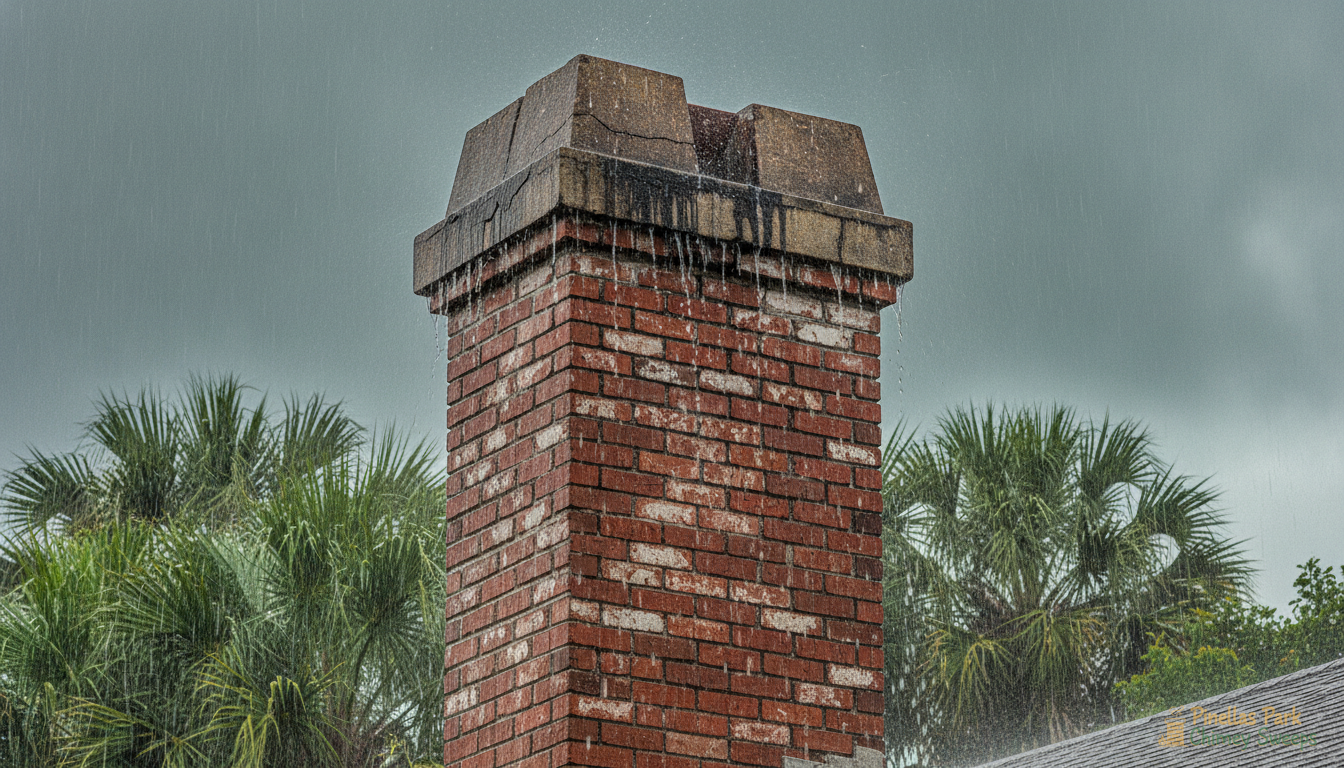
The Unique Moisture Challenge for Pinellas Park Chimneys
Florida homeowners sometimes assume that chimney moisture damage is a cold-climate problem — the result of freeze-thaw cycles cracking brick and mortar. While freeze-thaw damage is real, it's far from the only mechanism by which water destroys masonry chimneys. In Pinellas Park and throughout the Tampa Bay area, we receive more than 50 inches of rain annually, summer thunderstorms can deliver several inches of water in a matter of hours, and the ambient humidity rarely drops to levels that would allow masonry to fully dry between rain events.
This combination of high rainfall, sustained humidity, and intense UV exposure creates a relentless moisture cycle that attacks chimney masonry from every direction simultaneously. At Pinellas Park Chimney Sweeps, water-related chimney damage is among the most common issues we identify during inspections across Pinellas County — and the good news is that most of it is entirely preventable.
How Water Enters Your Chimney System
Water doesn't enter a chimney through a single point of failure. It attacks from multiple directions at once, and each entry point creates its own category of damage. Understanding where water gets in is the first step toward stopping it.
- The open flue: The most direct entry point. Without a properly fitted chimney cap, every rainstorm sends water straight down the flue, saturating the smoke shelf, damper, and firebox floor. Over time this corrodes the damper assembly and saturates the mortar inside the firebox.
- The chimney crown: The concrete or mortar cap that covers the top of the chimney masonry (distinct from the flue cap) develops cracks over time from UV exposure and thermal cycling. Cracked crowns funnel rainwater directly into the masonry below.
- Failed flashing: The metal flashing that seals the junction between your chimney and roof is one of the most failure-prone components in the entire system. When flashing lifts, corrodes, or loses its sealant, water runs behind it and into the structure of your home.
- Porous masonry: Brick and mortar are naturally porous and absorb water directly from rainfall and humidity. Absorbed moisture weakens mortar joints, causes brick faces to spall, and enables biological growth within the masonry.
Signs That Water Is Already Damaging Your Chimney
Water damage is often well advanced by the time it becomes visible. If you notice any of the following, it's time to schedule a professional chimney inspection and address the issue before it escalates:
- White staining (efflorescence) on exterior brick — this is salt being drawn to the surface as water evaporates from inside the masonry, a sign of ongoing moisture absorption
- Spalling brick faces — brick surfaces flaking, chipping, or breaking off, indicating that moisture has penetrated and is expanding within the brick structure
- Crumbling or recessed mortar joints — deteriorated mortar allows progressively more water to enter the masonry
- Water stains on ceilings or walls near the chimney — a clear sign that water is moving through the chimney structure into your home's interior
- Rust stains inside the firebox — indicating that water is reaching the damper assembly and firebox components
- A musty smell from the fireplace — often a sign of moisture, biological growth, or both inside the flue or smoke chamber
If you're seeing any of these warning signs at your St. Petersburg, Kenneth City, or Lealman home, don't wait — water damage compounds quickly in Florida's climate.
The Right Order of Operations for Chimney Moisture Protection
Protecting your chimney from Florida's moisture requires addressing all entry points in the correct sequence. Applying waterproofing over unrepaired masonry, for example, traps moisture already inside the brick and accelerates damage rather than preventing it. The proper approach follows this order:
- Inspection first: A thorough chimney inspection identifies the specific condition of your crown, flashing, mortar joints, and flue before any treatment begins.
- Complete all repairs: Cracked crowns, deteriorated mortar joints, and compromised flashing must be repaired before waterproofing is applied. Our chimney repair service handles everything from minor tuckpointing to complete crown rebuilds.
- Install or replace your chimney cap: A properly fitted stainless steel chimney cap is your first line of defense against direct water entry into the flue. Caps also block wildlife and debris, making every subsequent maintenance visit less involved.
- Apply professional waterproofing: After repairs are complete and the cap is in place, our chimney waterproofing treatment seals the exterior masonry with a penetrating, vapor-permeable formula that blocks liquid water from entering while still allowing the masonry to breathe and release any residual interior moisture.
This comprehensive approach gives your chimney maximum protection against Pinellas Park's rainfall and humidity cycles — typically lasting five to ten years before reapplication is warranted.
Why Vapor-Permeable Waterproofing Matters in Florida
Not all waterproofing products are appropriate for chimney masonry, and this distinction is especially important in Florida's climate. Standard exterior paints and film-forming sealants block moisture transmission in both directions — meaning they trap humidity already absorbed within the masonry. In a high-humidity environment like ours, this accelerates spalling and mortar failure rather than preventing it.
Professional chimney waterproofing products are specifically formulated to be vapor-permeable: they penetrate deep into the masonry pores and block liquid water from entering while allowing water vapor to escape outward. This allows the masonry to release absorbed humidity naturally while remaining protected against new moisture intrusion from rain and atmospheric humidity.
Our technicians use only professional-grade, penetrating chimney waterproofers rated for the sustained rainfall and UV exposure typical of the Pinellas County region.
Protect Your Chimney Before the Next Rainy Season
Florida's rainy season typically runs from June through September, but meaningful rainfall occurs year-round in Pinellas Park. The best time to address chimney moisture protection is before the heaviest rain arrives — not after water damage has already found its way into your home's structure.
Pinellas Park Chimney Sweeps is available seven days a week, 8:00 AM to 6:00 PM, to inspect, repair, and waterproof your chimney. We serve homeowners throughout Pinellas County, including Gulfport, Riviera Bay, and St. Petersburg. Call us at (727) 617-8222 or email [email protected] to schedule your chimney waterproofing service in Pinellas Park today.